

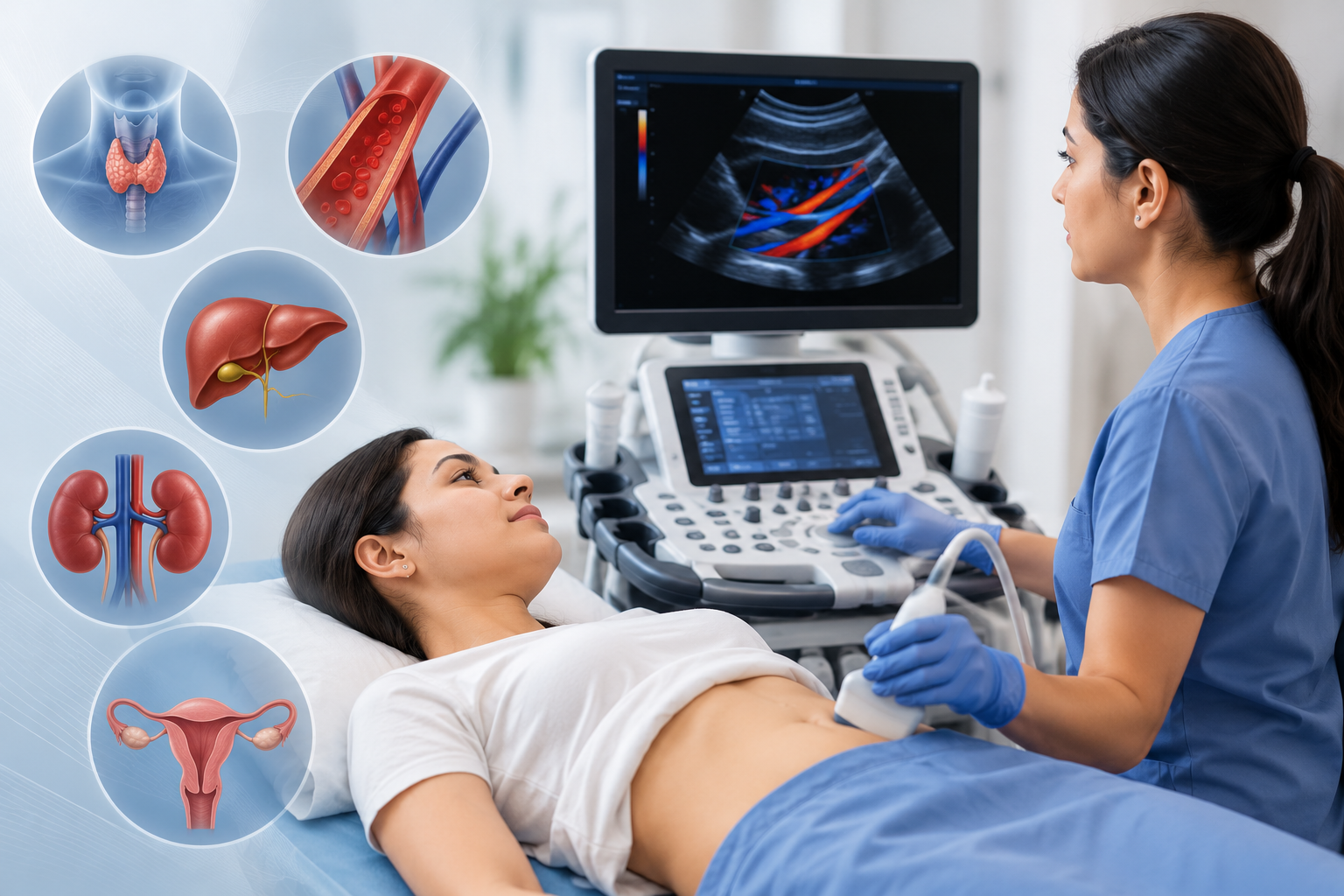
Medical imaging plays a crucial role in diagnosing and monitoring a wide range of health conditions. Among the most commonly recommended diagnostic procedures are Ultrasound and Color Doppler Tests. These non-invasive, painless, and highly effective imaging techniques help doctors evaluate organs, tissues, blood vessels, and blood flow within the body.
If your physician has advised an ultrasound or color Doppler test, understanding why these tests are performed and what they can detect can help you feel more confident about the diagnostic process.
What Is an Ultrasound Test?
An ultrasound is a diagnostic imaging procedure that uses high-frequency sound waves to create real-time images of internal organs and structures. Unlike X-rays or CT scans, ultrasound does not use radiation, making it a safe option for patients of all ages, including pregnant women.
Ultrasound scans are commonly used to examine the liver, kidneys, gallbladder, pancreas, thyroid gland, reproductive organs, and soft tissues.
What Is a Color Doppler Test?
A Color Doppler Test is an advanced ultrasound technique that evaluates blood flow through arteries and veins. By displaying blood movement in different colors, this test helps healthcare professionals assess circulation and detect abnormalities in blood vessels.
Color Doppler imaging is especially useful for diagnosing vascular conditions, blood clots, narrowed arteries, and circulation-related disorders.
When Does Your Doctor Recommend an Ultrasound?
Your doctor may suggest an ultrasound if you are experiencing symptoms such as:
1. Abdominal Pain or Digestive Issues
Ultrasound can help identify conditions affecting the liver, gallbladder, kidneys, pancreas, and spleen. It is often used to detect gallstones, kidney stones, fatty liver disease, and abdominal infections.
2. Pregnancy Monitoring
Ultrasound is an essential part of prenatal care. It helps monitor fetal growth, assess the baby’s development, determine due dates, and identify potential complications.
3. Pelvic Pain and Gynecological Concerns
Women experiencing pelvic discomfort, irregular menstrual cycles, ovarian cysts, or fibroids may require a pelvic ultrasound for accurate diagnosis.
4. Thyroid and Neck Swelling
Ultrasound can evaluate thyroid nodules, cysts, and enlargement of the thyroid gland.
5. Soft Tissue Lumps or Swelling
Doctors often use ultrasound to examine lumps, cysts, infections, and soft tissue abnormalities.
When Is a Color Doppler Test Recommended?
Color Doppler studies are commonly advised when doctors need to assess blood circulation or investigate vascular disorders.
1. Leg Pain, Swelling, or Varicose Veins
Color Doppler helps identify blocked veins, blood clots, and chronic venous insufficiency.
2. Suspected Deep Vein Thrombosis (DVT)
The test can detect blood clots in deep veins, which may become life-threatening if left untreated.
3. Peripheral Artery Disease
Patients with leg pain while walking or poor circulation may require a Doppler study to evaluate blood flow in the arteries.
4. Carotid Artery Evaluation
Color Doppler can assess blood flow to the brain and help identify narrowed carotid arteries, reducing the risk of stroke.
5. Pregnancy-Related Blood Flow Assessment
In high-risk pregnancies, Doppler imaging helps monitor blood flow between the mother, placenta, and fetus.
What Conditions Can Ultrasound Detect?
An ultrasound scan can help diagnose:
- Gallstones and gallbladder diseases
- Kidney stones
- Fatty liver disease
- Liver enlargement
- Pancreatic disorders
- Ovarian cysts
- Uterine fibroids
- Thyroid nodules
- Abdominal masses
- Pregnancy-related conditions
What Conditions Can Color Doppler Detect?
Color Doppler imaging is useful for identifying:
- Deep Vein Thrombosis (DVT)
- Varicose veins
- Peripheral artery disease
- Blood vessel blockages
- Carotid artery narrowing
- Venous insufficiency
- Vascular abnormalities
- Reduced blood circulation
- Pregnancy-related blood flow complications
Benefits of Ultrasound and Color Doppler Tests
These imaging procedures offer several advantages:
- Non-invasive and painless
- No exposure to radiation
- Real-time imaging results
- Safe during pregnancy
- Quick and accurate diagnosis
- Cost-effective compared to many advanced imaging techniques
- Helps guide treatment decisions
Preparing for Your Test
Preparation depends on the type of scan being performed. Some abdominal ultrasounds may require fasting, while pelvic ultrasounds may require a full bladder. Your healthcare provider will provide specific instructions before your appointment.
Ultrasound and Color Doppler Services in Greater Kailash, South Delhi
If you are looking for reliable Ultrasound and Color Doppler Tests in Greater Kailash, South Delhi, choosing an experienced diagnostic center ensures accurate imaging, timely reports, and expert medical guidance. Advanced diagnostic facilities and skilled radiologists play a vital role in delivering precise results for effective treatment planning.
Conclusion
Ultrasound and Color Doppler tests are valuable diagnostic tools that help doctors detect a wide range of health conditions quickly and safely. Whether evaluating abdominal pain, monitoring pregnancy, diagnosing vascular disorders, or assessing blood circulation, these tests provide essential information for accurate diagnosis and treatment. If your doctor recommends an ultrasound or Color Doppler examination, timely testing can help identify potential health concerns early and support better long-term health outcomes.
For accurate Ultrasound and Color Doppler Tests in Greater Kailash, GK-1, Kailash Colony, Nehru Place, Kalkaji, CR Park, East of Kailash, Lajpat Nagar, and South Delhi, consult a trusted diagnostic center equipped with modern imaging technology and experienced specialists.